Celebrate Our 15th Anniversary: Special Offers on Long-Term Intensive Courses
All of us Spanish teachers at Cronopios Idiomas have faced that key moment when introducing the subjunctive mood in our Spanish classes: a moment that, on the one hand, is mysterious and creates excitement and curiosity, but on the other can also cause apprehension, fear and uncertainty. What should we do? How can we introduce it without sending our students running for the hills? Can we teach the subjunctive in a fun and communicative way?
There are plenty of activities that can help students practise and assimilate the Spanish subjunctive effectively, enjoyably and in a fun way. As we all know, the subjunctive is another planet within the Milky Way that is Spanish—or, more accurately, a satellite orbiting its planet: the indicative. We cannot explore this satellite all at once or try to cover everything from the very beginning. A coherent progression is the key to landing on this new satellite successfully and with enthusiasm.
Following the guidelines of the CEFR, students are first introduced to the subjunctive at intermediate level B1 through finite subordinate noun clauses, both when functioning as the subject (me encanta que me llames) and as the direct object (quiero que vengas). Alongside grammar rules and, in this case, practising the conjugation of the present subjunctive, it is essential to reinforce what students have learned through simple, engaging and relevant activities. Relevance is particularly important: when an activity reflects a real situation that students may encounter in their everyday lives, it becomes much easier for them to connect with it.
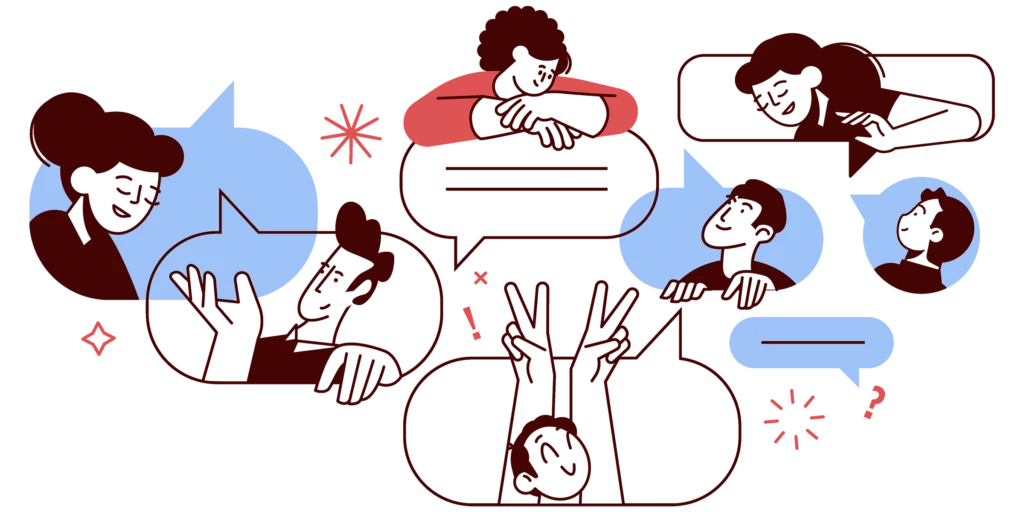
With this in mind, we are going to choose three or four common situations that students may experience in the Spanish classroom, such as:
The exercise is as simple as it is effective: each student expresses what they like and dislike in each of these situations in the Spanish classroom. For example:
Despite its simplicity, the activity combines relevance, usefulness and appropriateness. At the same time, it provides us with extremely valuable information about our students’ personalities and how they react in the Spanish classroom. If we replace these three situations with a different context or setting, the possibilities are endless. We should also remember that repetition through different skills is essential when assimilating new content. Students should therefore complete this activity both orally and in writing, repeating it several times.
We will continue working with noun clauses, but this time we will focus on verbs related to thought, perception and speech. To practise this rule, we can adapt Marta Higueras’s well-known activity for assimilating lexical collocations and use it instead to reinforce the rule associated with these verbs.
We arrange our students in pairs. One student has to negate the statement made by their partner. For example:
These are just two examples of simple yet relevant activities for practising the subjunctive in the Spanish classroom. We should always keep the students’ level in mind: we are working at level B. Starting with simple exercises and easy-to-understand instructions before gradually moving towards more complex activities will help students build confidence and approach this new satellite with enthusiasm and interest.
Ideally, the student negating the sentence should respond quickly. However, during the first few classes, we should give them enough time to recall and use the subjunctive form they have just learned. This repetition helps reinforce the form while remaining relevant to real-life communication, since in many everyday interactions we negate something another person has said, either to correct information or to express our own point of view.
Don’t let the discovery of this new satellite of the indicative intimidate you. After all, it is impossible to speak Spanish without the subjunctive, and once you lo descubras, asimiles y lo uses en tu día a día (¡ojo con todos los subjuntivos que acabo de utilizar!), you’ll be thinking: ¡Cómo he podido vivir todo el nivel A sin subjuntivo! ¡Subjuntivízate!
Clara holds a degree in Hispanic Philology from the University of Alcalá and a Master’s in Applied Linguistics for the Teaching of Spanish as a Foreign Language (E/LE) from Nebrija University. She has worked as a Spanish teacher at various European universities, the Instituto Cervantes, and the European Commission in Brussels.